Graduation Project -An Alert System for Epileptic Seizure Detection over Global System Mobile
May 19, 2024 2024-05-19 11:53Graduation Project -An Alert System for Epileptic Seizure Detection over Global System Mobile
Graduation Project -An Alert System for Epileptic Seizure Detection over Global System Mobile
Epilepsy, a neurological condition affecting approximately 50 million people worldwide, poses significant risks, particularly due to the unpredictability of seizures. The ability to predict and promptly respond to these seizures can drastically reduce the dangers associated with them, enhancing the quality of life for those affected.
Introduction
To address this critical need: a wearable device designed to detect generalized epileptic seizures and alert family members for immediate assistance. This cutting-edge system leverages the latest technology to monitor vital signs and environmental factors that can indicate an impending seizure.
How It Works
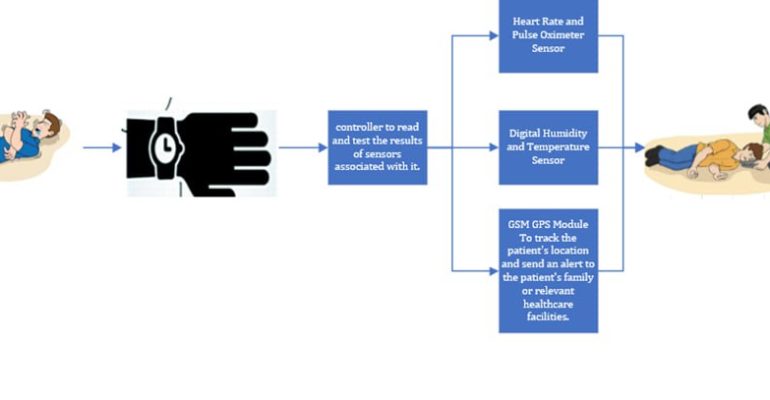
The device utilizes the ESP32 microcontroller, coupled with several advanced sensors, to monitor a range of physiological and environmental parameters:
Temperature and Humidity: Using the STH21 sensor, the device measures temperature and humidity levels, alerting if the temperature exceeds 38 degrees Celsius.
Heart Rate and Oxygen Levels: The MAX30102 sensor monitors the patient’s heart rate, triggering an alert if it surpasses 100 beats per minute, and checks oxygen saturation, sending a warning if it drops below 90%.
These sensors continually feed data into the system, which processes the information to identify potential seizures or abnormal health conditions.
Immediate Alerts and Assistance
In the event of detecting an abnormal condition, the system takes immediate action by sending an alert message. This alert includes the patient’s current location, utilizing the Global System for Mobile Communications (GSM Module SIM-808), ensuring that family members can respond rapidly to provide necessary aid.
Impact and Benefits
This project holds the potential to significantly enhance the safety and well-being of individuals with epilepsy. By enabling rapid response to seizures and other health anomalies, the device can prevent serious injuries and save lives. The integration of real-time monitoring and instant communication ensures that help is always within reach, reducing the anxiety and uncertainty that often accompanies this condition.
This graduation project is the work of Fatima Al-Zahraa Alaa from the Computer Networks engineering department, supervised by Assistant Lecturer Dunya Abbas.