Graduation Project: Ground Modification Technique for Bandwidth Expansion in Wearable Antenna Systems
April 22, 2025 2025-04-22 12:21Graduation Project: Ground Modification Technique for Bandwidth Expansion in Wearable Antenna Systems
Graduation Project: Ground Modification Technique for Bandwidth Expansion in Wearable Antenna Systems
This project is the work of the student Abdulkadir Mukram Taher from the Information and Communication Engineering Department, supervised by Asst. Prof. Dr. Bashar Bahar Nouri.
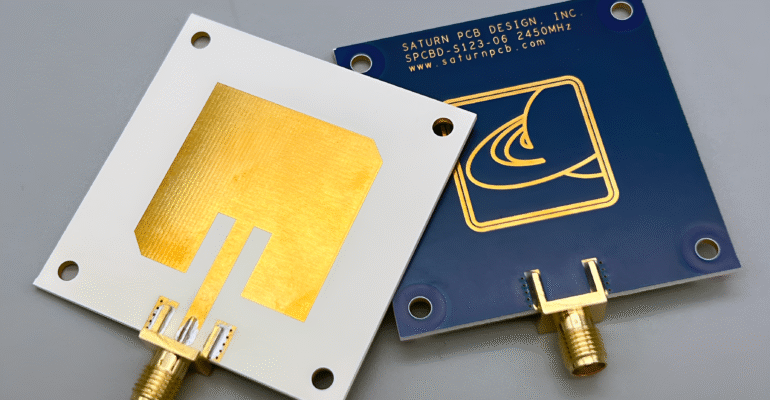
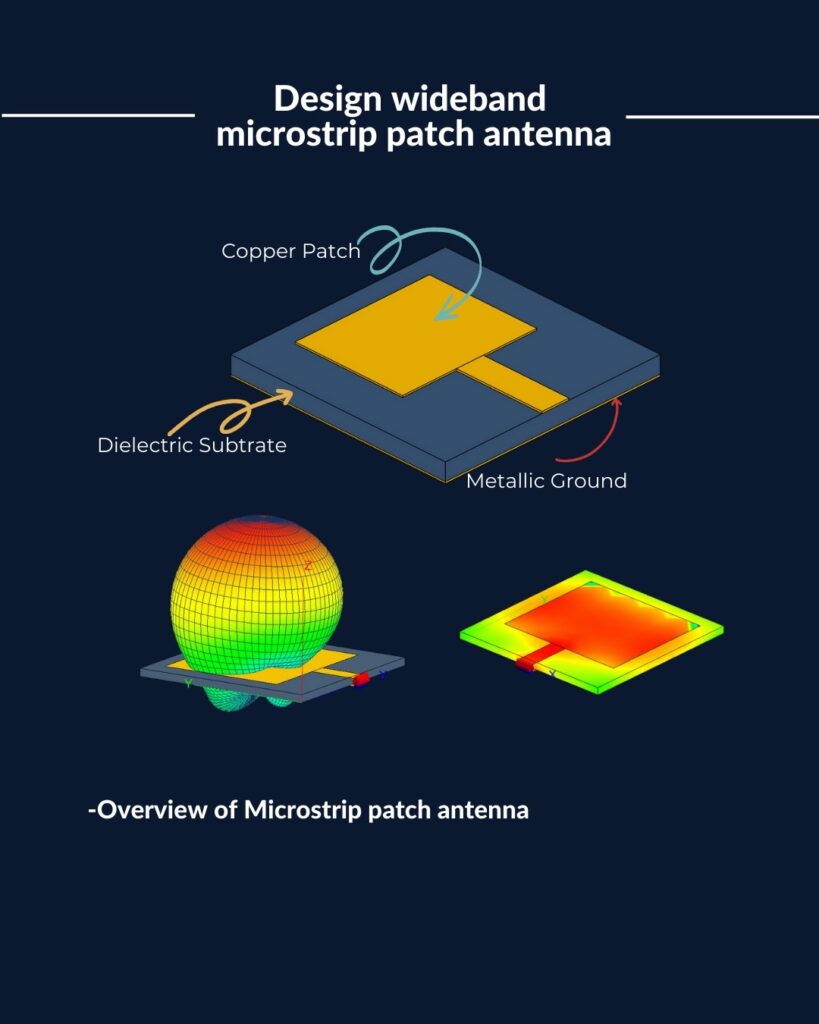
The project focuses on the design and development of a wideband microstrip patch antenna characterized by its lightweight, compact size, low production cost, and flexibility. It operates efficiently across various applications such as the Internet of Things (IoT), wireless systems, and 5G technology, while maintaining a size suitable for wearable devices.
Design and Implementation:
Two antenna designs were compared:
-
The traditional microstrip patch antenna.
-
The proposed antenna, which utilizes a different arrangement and improved architecture based on Defected Ground Structure (DGS) technology.
About DGS – Defected Ground Structure:
DGS is a technique that involves introducing specific slots or openings in the ground plane of the antenna. These modifications affect ground currents, resulting in:
- Additional resonance within the antenna
- Improved reflection coefficient (S11) performance
- Wider bandwidth
- Reduced antenna size without compromising efficiency
However, the effectiveness of DGS depends on the precise shape, size, and location of the slots, and unoptimized designs may not yield satisfactory results.


Results of the Traditional Antenna (including DGS):
-
DGS was applied to improve the performance of the traditional antenna, and while some enhancement was achieved, the bandwidth remained too narrow for many modern transmission and reception technologies.
-
The bandwidth remained below 0.911 GHz, which is insufficient for the target applications.
-
The reflection coefficient stayed limited to a narrow range, unable to consistently maintain S11 < -10 dB across a wide spectrum.

Results of the Proposed Antenna:
-
The design was significantly modified, with DGS implemented in a customized configuration within the ground plane.
-
The proposed antenna achieved a bandwidth exceeding 7 GHz with high efficiency.
-
It maintained a reflection coefficient below -10 dB across the entire bandwidth, indicating excellent energy transmission and minimal signal reflection.
-
The antenna size was reduced from 3900 mm² (traditional design) to 2400 mm², representing a reduction of approximately 38.46%.

Scientific Conclusion:
The results demonstrate that random or conventional use of DGS does not always lead to effective outcomes. The DGS design must be precisely tailored to match resonance requirements and current distribution within the antenna. The proposed antenna proved effective in combining compact size, high performance, and wide frequency support, making it a strong candidate for modern wearable antenna applications.